Read My Face
Your face says things you never have to explain.
Your face says things you never have to explain.
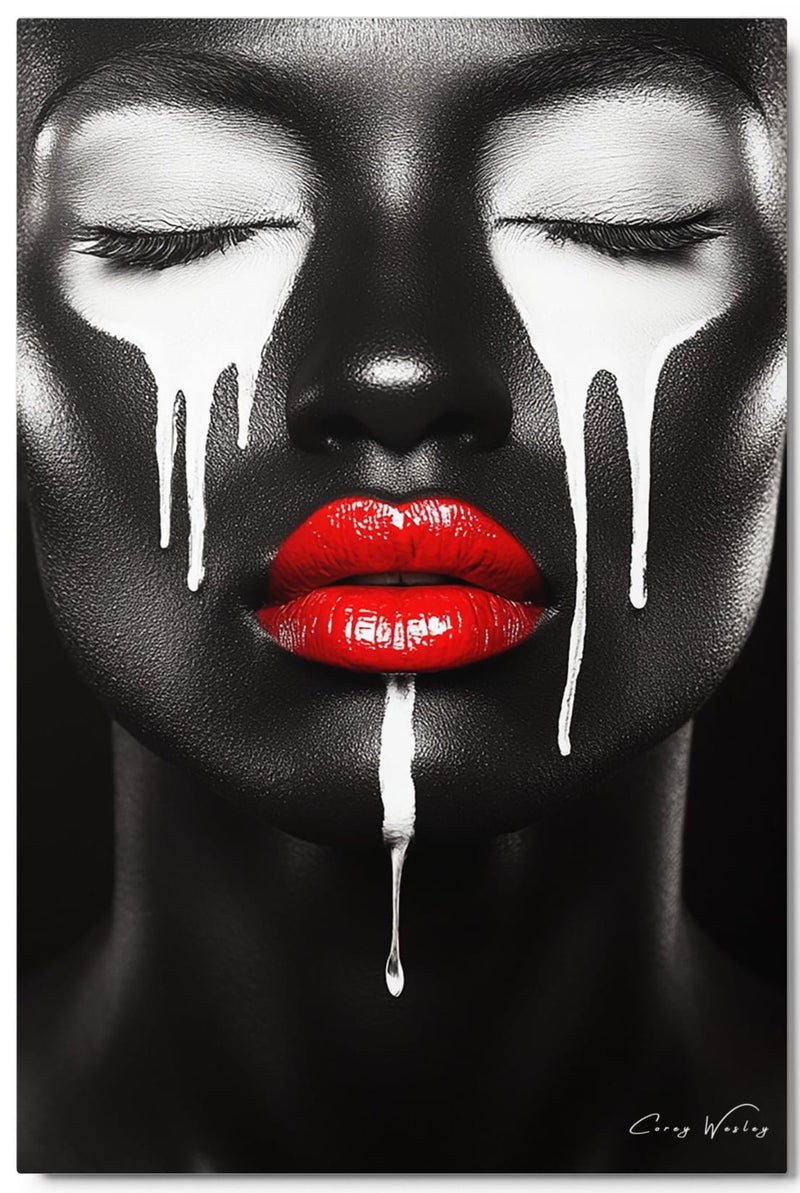
Read My Face came from looking in the mirror and thinking about all the times we don't like what we see. Sometimes we're happy. Sometimes we're carrying something difficult. Loss. Trauma. Insecurity. A part of ourselves we've spent years trying to quiet down.
People used to call me "extra." I knew what they meant, and for a while I took it as something negative. I could try to hold back my personality, but I couldn't change what showed up on my face.
As I've gotten older, I see that differently. I see the beauty in my own face and my smile. I see it in my mother's smile. Even while she's going through something difficult, I can still see her joy.
That's where this piece came from.
A face holds more than an expression. It carries where we've been, what we're going through, and pieces of who we're becoming. The difficult parts of our lives don't last forever, but they become part of the journey.
So read my face. Read all our faces. There's a whole human experience there.
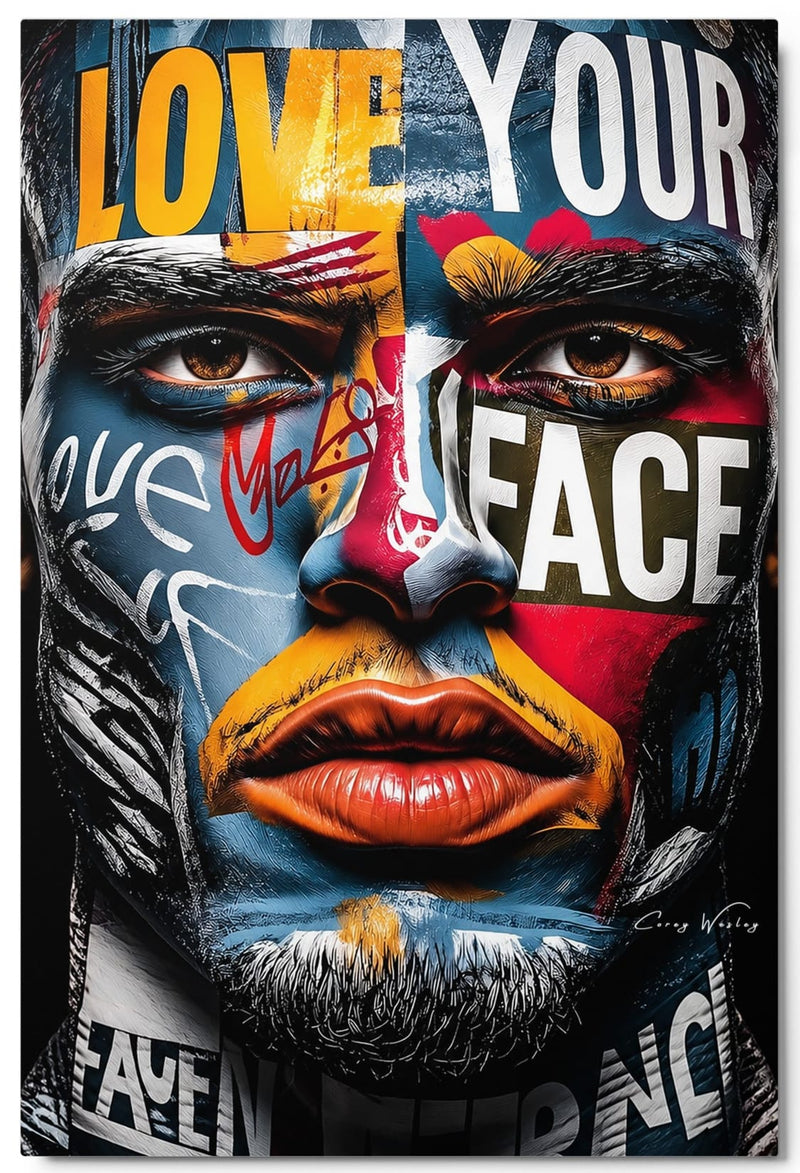
And whatever yours has been through, love your face.
Complementary work: Read My Face extends the idea behind Love Your Face. One is about accepting the face looking back at you. The other is about everything that face communicates to the world, whether you intended it to or not.
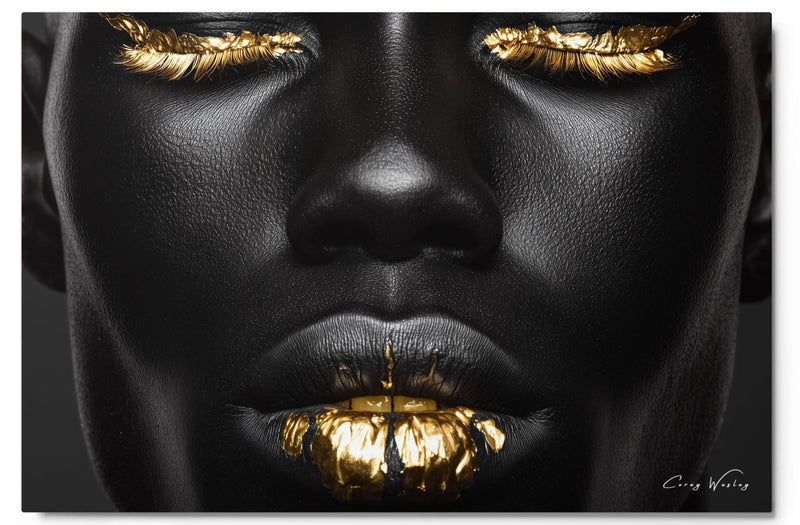
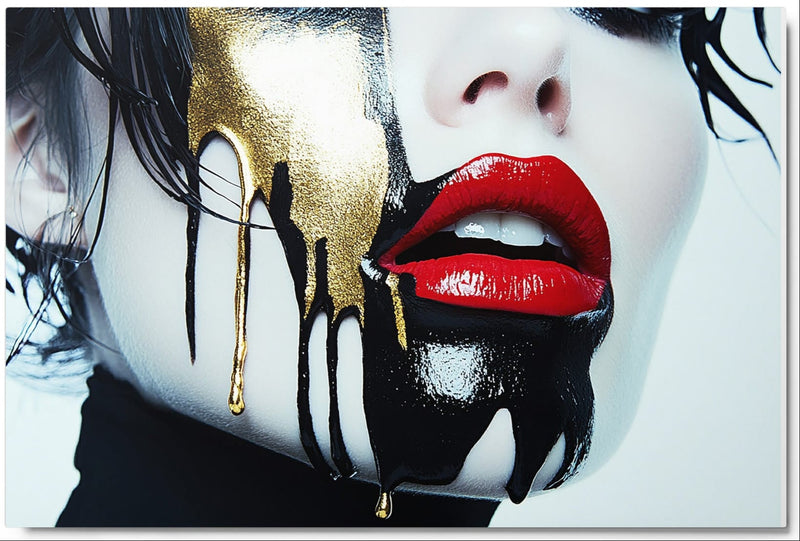
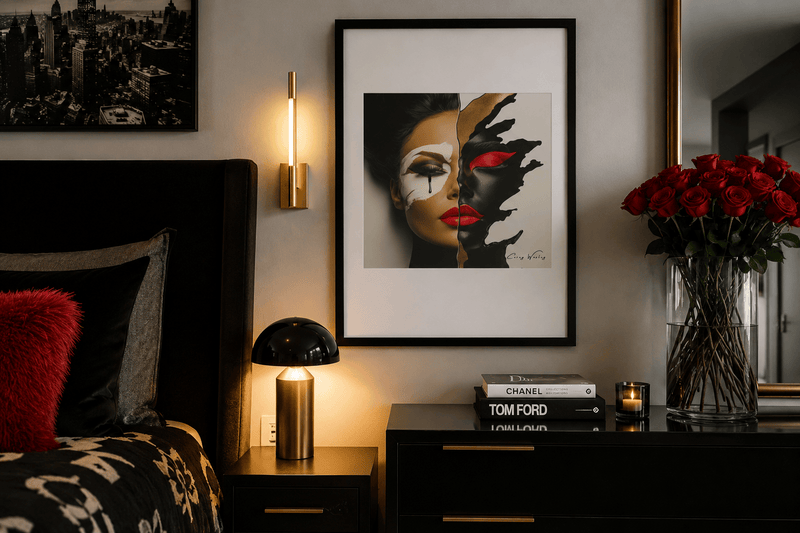
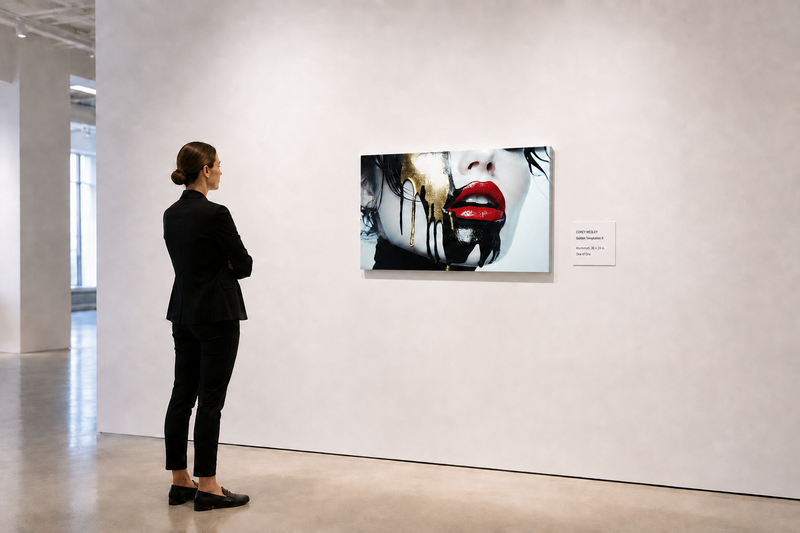
Read My Face is a one-of-one aluminum work from Unapologetic Faces: The Cost of Being Seen by Harlem artist Corey Wesley, signed and documented with a certificate of authenticity.
24x36 aluminum work. Aluminum metal surface with an MDF backing frame. Hangs 1/2 inch off the wall for a dimensional presentation. Scratch- and fade-resistant. Ready to hang. Signed by Corey Wesley. Signed certificate of authenticity included.
Contact Carol Ward About This Piece
Corey Wesley
Harlem shaped his practice: the faces on the subway, in recovery rooms, and in the space between performance and collapse. He creates what remains when the face stops performing.
His proprietary mixed-media process combines writing, Photoshop, Illustrator, and modern technology, including AI-assisted tools. Over days or months, he refines symbolism, color, composition, facial structure, and emotional tone until each work carries his recognizable visual language.
The faces in these works are archetypes. They belong to everyone. And no one.
More Available Works
Each one of one. Once acquired, it does not return.